Pedagogical Commitment
“ I want to build a community-based and democratic practice in early childhood that co-exists and creates knowledge alongside children.”
My Living inquiry revolves around “Identities, social responsibility, and diversity.”
“What kind of educators do children need?“
“We don’t follow children, we follow the ideas of children.”

Observation & Documentation Notes:


“Spider” Conversation with Hazel
The children discovered a spider in the quiet corner. Some of the children were unsure what to do with it, whether to kill it out of fear or leave it be. I tried to pick it up with a piece of paper (facing my arachnophobia) to bring it to the window, and during this time, it was just Hazel and me. She was watching the spider crawl from the bottom of the window to the roof with such curiosity. Then the conversation developed. I hope to bring this conversation back.
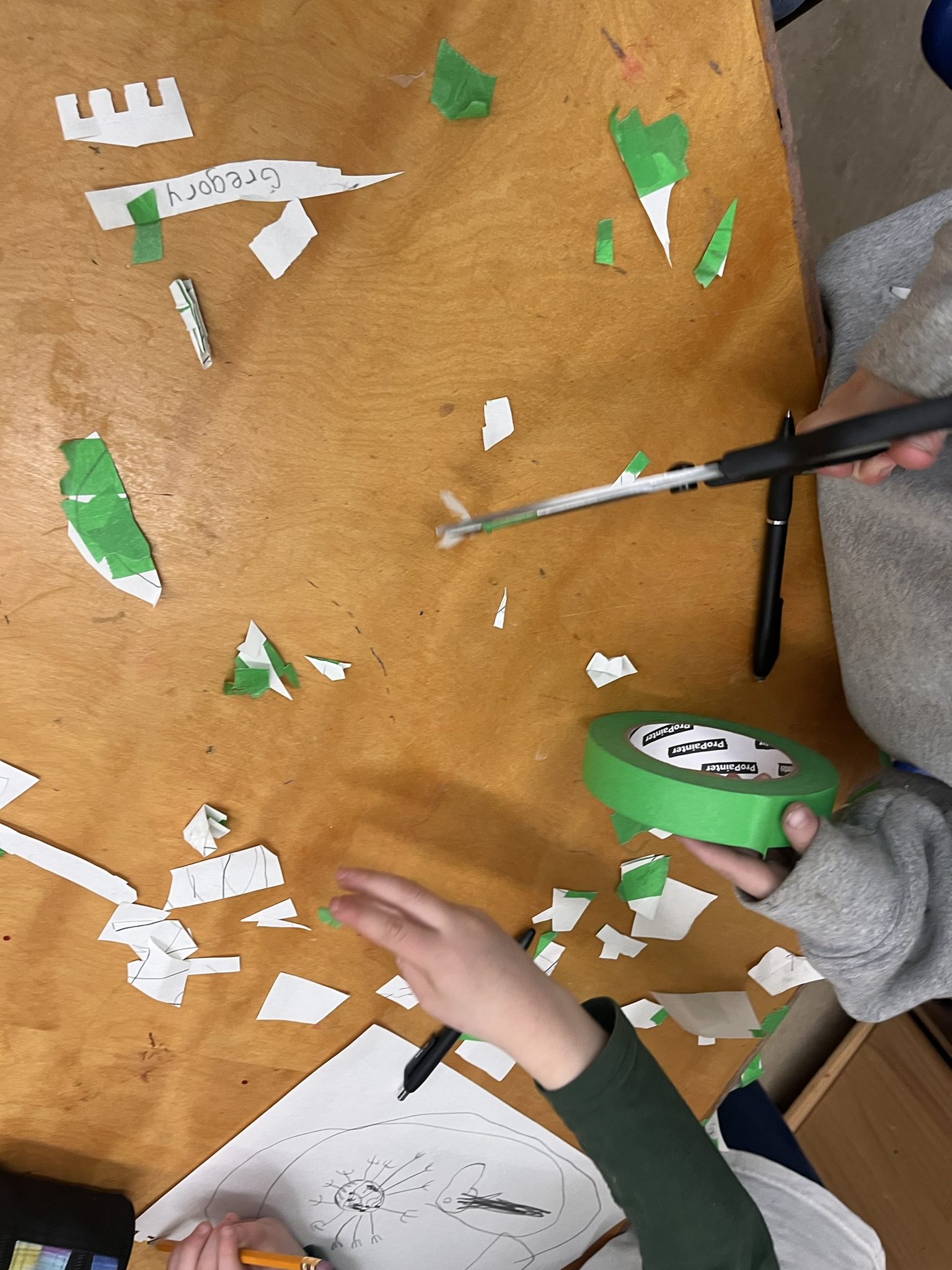
“..a rich means of storytelling, and for young children, a valuable way of making sense of the world”.
Steele, B. (1998)
The Journey Continues “Spiders”
Our drawing rituals and connectivity are very much alive. With some guidance and support from my practicum coordinator, I was able to create more opportunities to actively listen and stay present.
“Putting away my adult agenda” has maintained a rewarding experience to learn alongside the children and co-create knowledge as a collective group. Reciprocal connections, holding great gifts around communication.
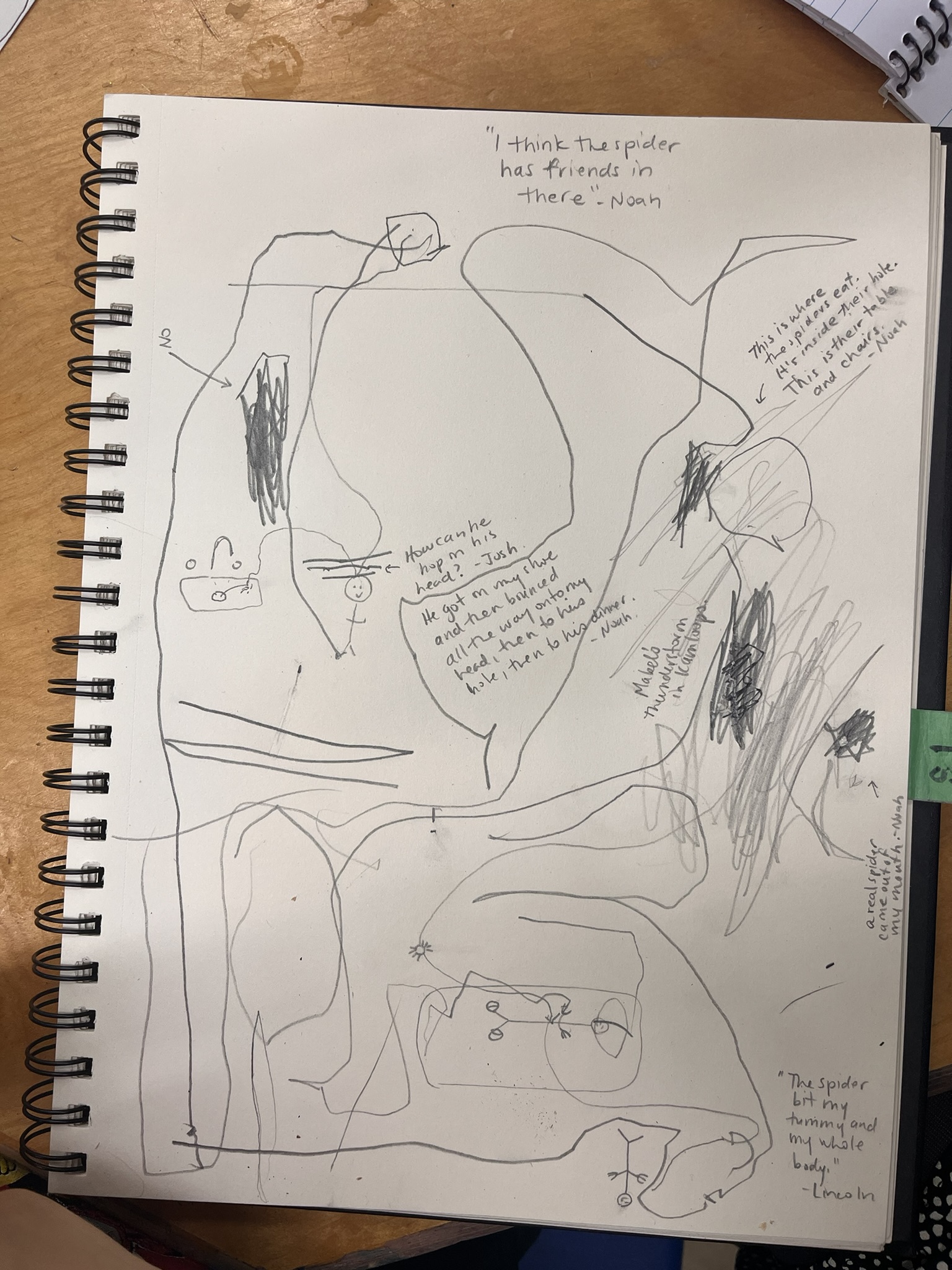
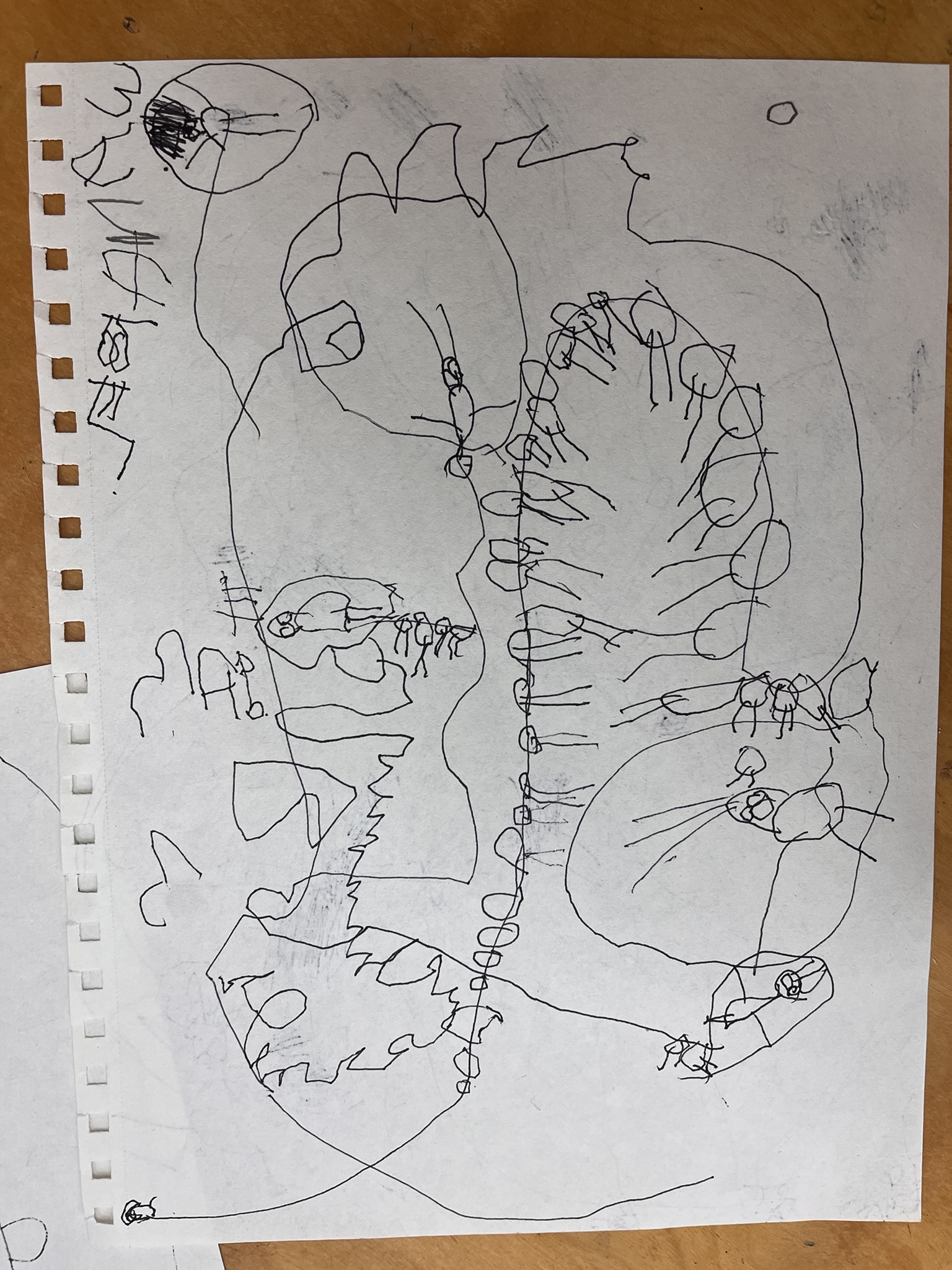
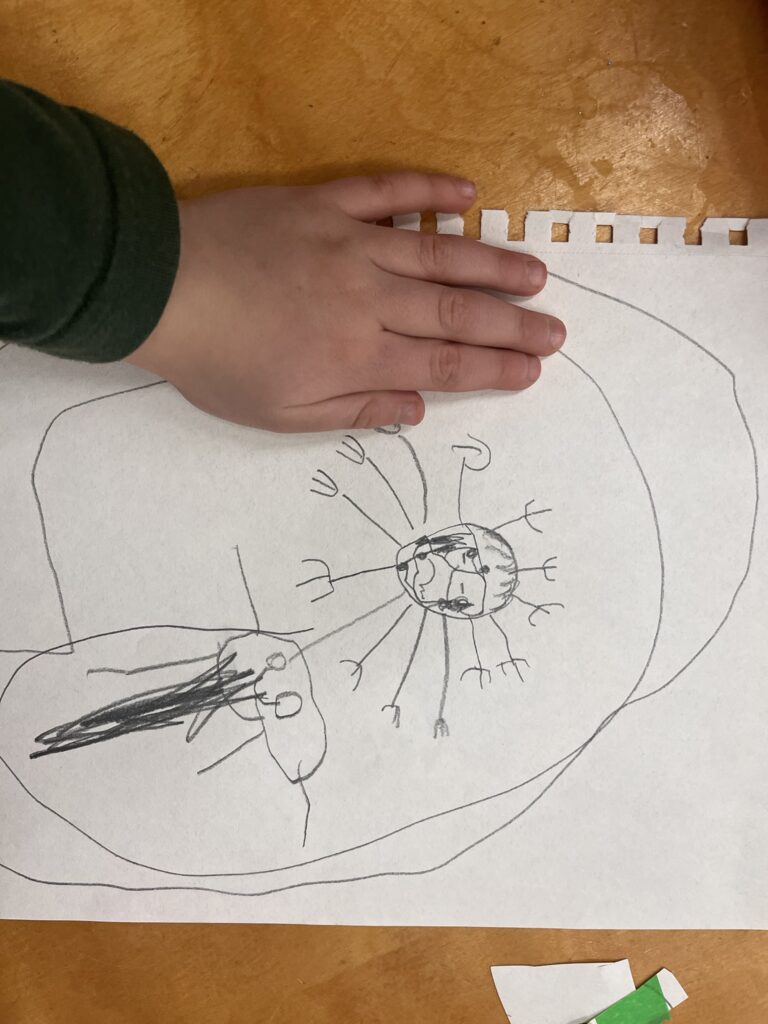
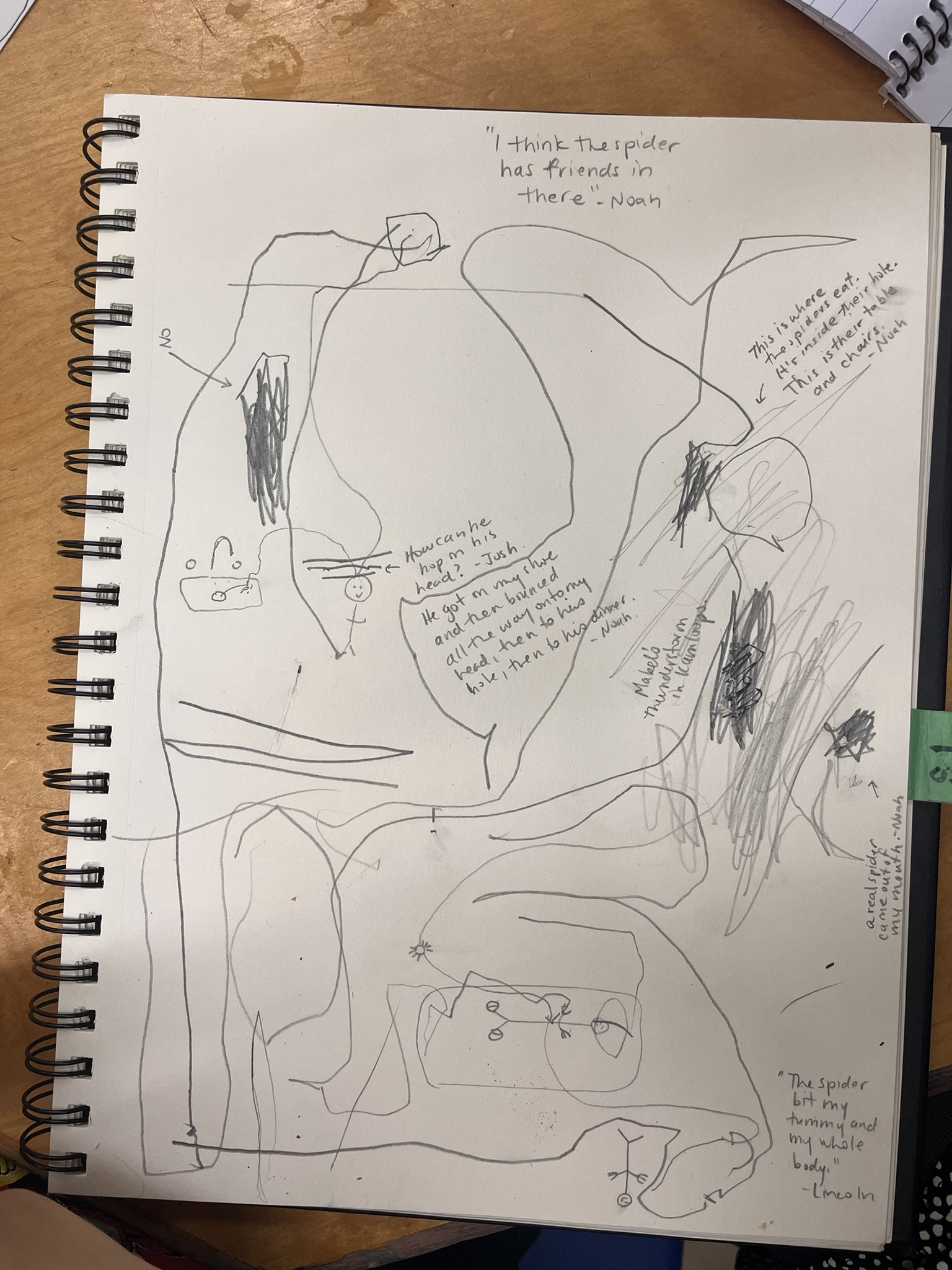
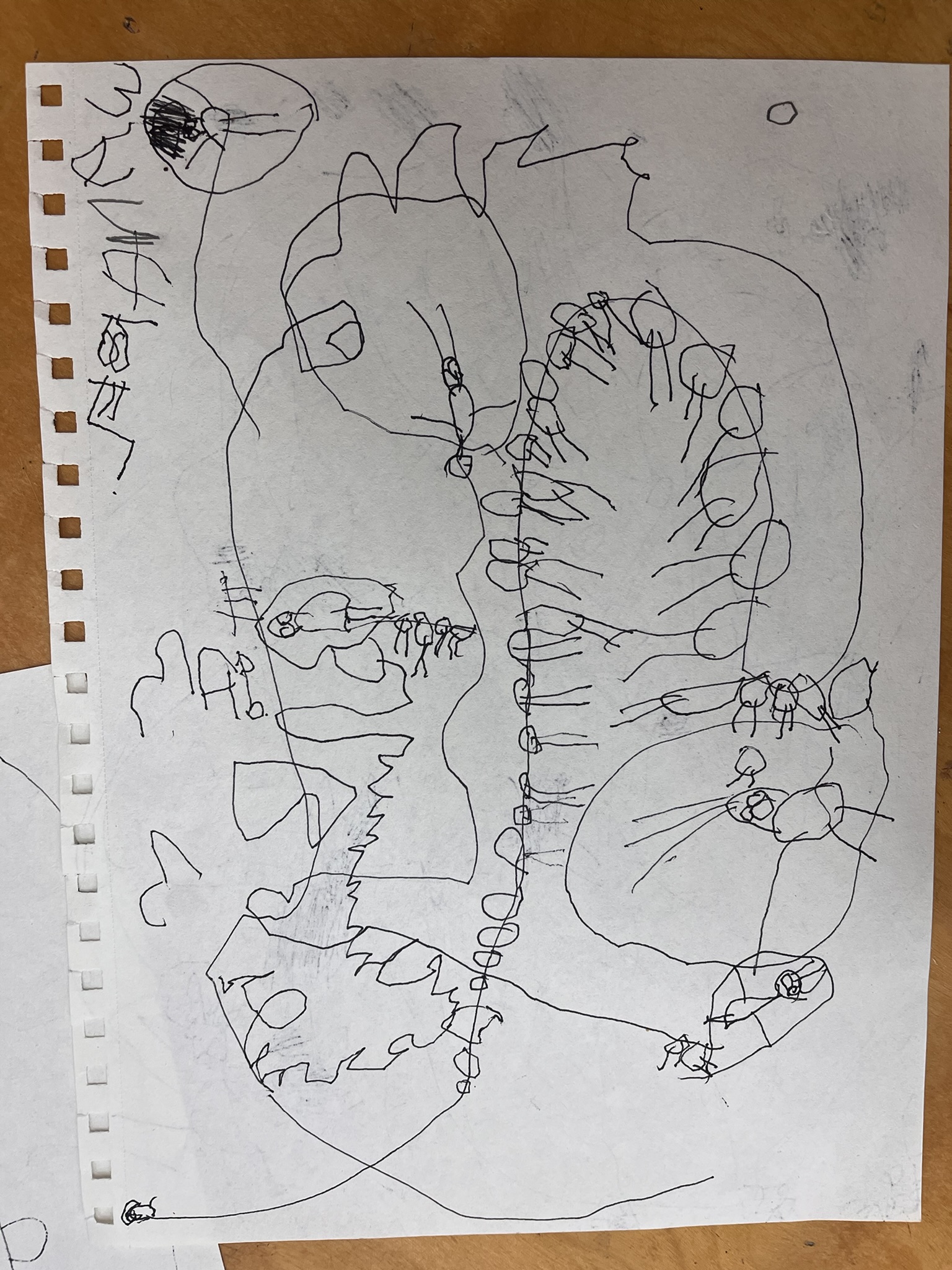
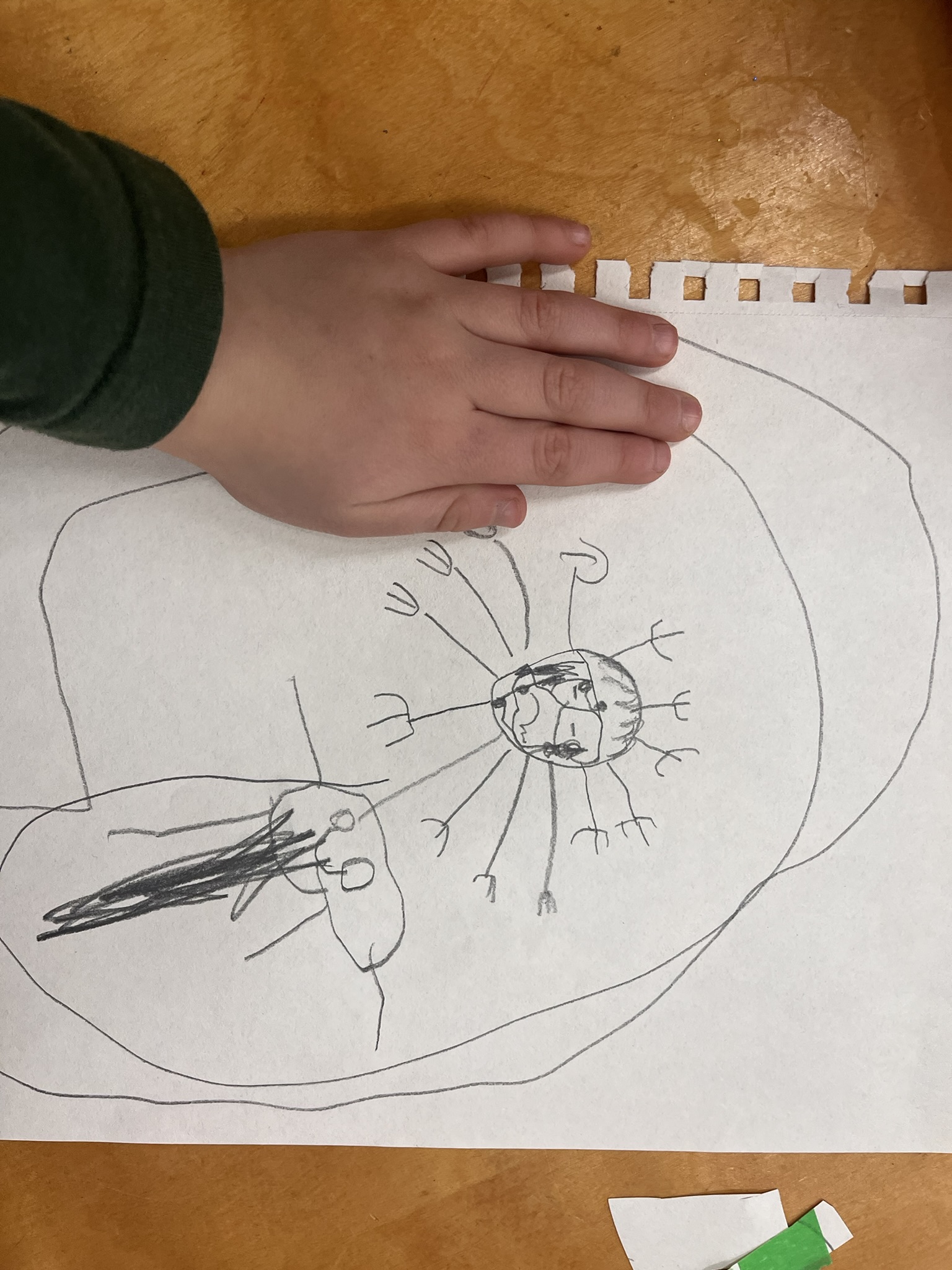
Recognizing and learning with Hazel’s perspective story around this spider invites the other children to tell their stories, to express their inner imaginative thought process. I ask the children at my drawing table, “Can I tell you about Hazel’s spider story?” “I would love to hear what you think. Do you want to draw about it with me?” Creating an open space for dialogue.
A simple invitation… leads to such curiosity

“Knowledge is relational and specific to place”
My question of “How can I keep the children interested and focused within our drawing ritual?”
During these times of drawing, I was overwhelmed with thoughts of
- I am not doing enough
- The children are not interested or “staying on topic”
- What am I doing wrong?
To better understand these drawing experiences I needed to see it through two different lenses:
- These moments should be viewed and approached as opportunities, not tasks.
- Sitting with the children, being completely present and adhering to their conversations with active listening and open dialogue.
Pedagogical Process: